Australian Owlet-nightjar
The Tiny Nocturnal Bird With a Remarkable Secret Life
Imagine walking through the Australian bush after sunset and hearing a strange, soft call coming from a hollow tree. You shine your torch towards the sound, and two enormous eyes stare back at you from a small, rounded face.
You may have just spotted an Australian Owlet-nightjar, one of Australia’s most fascinating nocturnal birds.
Despite its name, this unusual little bird isn’t an owl or a nightjar. It belongs to its own distinctive bird family and has developed some clever ways to survive in the Australian bush, where finding food and avoiding predators after dark are everyday challenges.
For bird lovers, spotting one is a special experience. They are small, well-camouflaged and often remarkably difficult to find, even in places where they are relatively common.
What Is an Australian Owlet-nightjar?
The Australian Owlet-nightjar (Aegotheles cristatus) is a small, nocturnal bird native to Australia. It is the most widespread member of the owlet-nightjar family found on the Australian mainland.
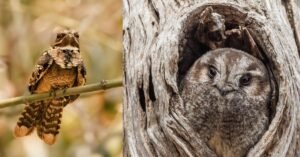
Although it has owl-like facial features, its appearance and behaviour are quite different from those of a typical owl. Its large forward-facing eyes, rounded head and short hooked bill give it an almost miniature owl appearance.
An adult generally measures around 21–25 centimetres in length, including its tail, and has soft, mottled plumage that helps it blend into tree bark.
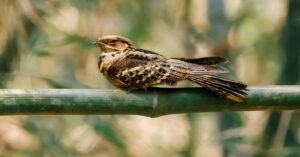
Its colouring usually ranges from grey-brown to reddish-brown, with fine markings across the feathers. This natural camouflage makes it difficult to distinguish from a patch of rough tree bark during daylight.
The species is sometimes called the Australian owlet-nightjar or moth owl.
What Does an Australian Owlet-nightjar Look Like?
One of the first things you’ll notice is its unusually large head and eyes.
The bird has a compact body, short legs and a relatively long tail. Its facial appearance can remind you of a tiny owl, particularly when it looks directly towards you.
Its feathers are beautifully patterned, with a mixture of brown, grey, cream and darker markings. These colours break up its outline against tree trunks and branches.
Male and Female Differences
Male and female Australian Owlet-nightjars look very similar. Their plumage can vary considerably, with some individuals appearing greyer while others have warmer reddish-brown colouring.
There are also differences in the colour of their feathers between individuals and regional populations.
This variation is useful when studying the species, but it can make identification slightly more challenging for inexperienced birdwatchers.
Where Does the Australian Owlet-nightjar Live?
The Australian Owlet-nightjar is found across much of mainland Australia, occupying a wide range of woodland and forest habitats.
You may encounter suitable habitat in:
- Open eucalyptus forests.
- Dry woodlands.
- Mallee scrub.
- River red gum forests.
- Tree-lined farmland.
- Areas containing mature trees with natural hollows.
Unlike some specialised woodland birds, this species can adapt to a variety of environments, provided suitable nesting and daytime shelter sites are available.
It is particularly associated with trees containing hollows, cracks and sheltered cavities.
Why Tree Hollows Are So Important
Tree hollows are essential to the Australian Owlet-nightjar.
During daylight hours, the bird generally rests inside a hollow, where it can remain hidden from predators and protected from harsh weather.
These cavities also provide potential nesting locations during the breeding season.
Unfortunately, old trees with suitable hollows are becoming increasingly important conservation resources. When mature trees are removed from forests, farmland or suburban areas, birds that depend on natural cavities can lose valuable shelter.
Keeping suitable old trees wherever possible is one practical way landholders can help wildlife.
What Does the Australian Owlet-nightjar Eat?
The Australian Owlet-nightjar is an insect-eating bird, relying mainly on small invertebrates for food.
Its diet includes moths, beetles, flying insects, spiders and other small creatures.
It usually hunts after sunset, using its excellent night vision and quick movements to locate prey.
How Does It Catch Its Food?
Unlike many birds that search for insects by probing through leaves or digging into the ground, the Australian Owlet-nightjar often catches flying insects in the air.
It may launch from a branch or another convenient perch, capture an insect and return to its resting position.
This hunting behaviour is sometimes described as aerial hawking.
Its broad mouth helps it catch small flying insects, making it well suited to feeding in low-light conditions.
For anyone watching nocturnal wildlife, seeing one dart out from a tree to catch an insect can be an unforgettable sight.
Why Is It Called an Owlet-nightjar?
The name can be confusing.
The Australian Owlet-nightjar has some physical similarities to owls, particularly its large eyes and rounded facial appearance. However, it is not actually an owl.
It also shares certain features and nocturnal habits with nightjars, which explains the second part of its common name.
Despite these similarities, owlet-nightjars belong to the family Aegothelidae, a separate group of birds.
They are an interesting example of how different bird families can develop similar features when adapting to comparable lifestyles.
The Strange Call of the Australian Owlet-nightjar
You are more likely to hear this bird before you see it.
Its call is a distinctive, high-pitched, rattling sound, often described as a harsh “chirr-chirr-chirr”. The sound can carry surprisingly well through quiet bushland after dark.
The call is particularly noticeable around dusk and before sunrise, although birds may occasionally call during the day.
Both sexes produce calls, and vocalisations help birds communicate and maintain their territories. If you’re walking through Australian woodland at night and hear this repeated sound, it’s worth stopping to listen carefully.
Breeding and Family Life
Australian Owlet-nightjars have an interesting approach to raising their young.
They generally use tree hollows for nesting, although other suitable cavities may also be used. The nest is often lined with fresh green leaves, creating a sheltered place for eggs and developing chicks.
Breeding generally takes place during the warmer months, with the exact timing varying across the country.
A typical clutch contains around three to five white eggs. Both parents participate in caring for their offspring, and the young remain dependent on their parents for a period after leaving the nest.
A Bird That Values Its Home
These birds are generally sedentary, meaning they tend to remain within the same general area throughout the year.
They can use several different hollows within their territory, moving between suitable daytime shelters depending on conditions.
This makes mature woodland particularly valuable. A single old tree may provide shelter opportunities for generations of wildlife.
An Amazing Survival Trick: Torpor
One of the most interesting things about the Australian Owlet-nightjar is its ability to enter a state called torpor.
Torpor is a temporary reduction in body temperature and metabolic activity. It allows an animal to conserve energy when conditions are cold or food is harder to find.
During particularly cold winter mornings, Australian Owlet-nightjars may enter this hibernation-like state while resting in their shelters.
They can also emerge from their hollows and sit in the sunshine, warming themselves before becoming active again.
It’s a remarkable adaptation for such a small bird.
How to Spot an Australian Owlet-nightjar in the Wild
If you’re hoping to see one, patience is essential.
Because these birds spend much of the day hidden inside tree hollows, walking through the bush looking for birds perched in open branches isn’t always effective.
Instead, try these approaches:
-
Visit suitable woodland: Look for mature eucalyptus trees and areas with plenty of natural hollows.
-
Listen around sunset: Their calls are often heard shortly after daylight fades.
-
Watch tree trunks: You might spot a pair of large eyes peering from a hollow entrance.
-
Look for sheltered cavities: Pay attention to old branches, dead trees and hollow trunks.
-
Be patient: Remain quiet and give the bird time to become active naturally.
Avoid shining bright torches directly into hollows or disturbing birds at their roosting sites. A good wildlife encounter should never come at the expense of the animal’s safety.
Is the Australian Owlet-nightjar Endangered?
The Australian Owlet-nightjar is generally regarded as a widespread species, with a conservation status of Least Concern.
However, that doesn’t mean its habitat should be taken for granted.
The loss of mature hollow-bearing trees can reduce the availability of suitable nesting and resting places. Land clearing, inappropriate habitat management and introduced predators can also create problems for native wildlife.
One of the simplest ways to support these birds is to retain old trees wherever it is safe and practical to do so.
Garden owners and rural landholders can also help by protecting native vegetation, avoiding unnecessary tree removal and keeping domestic cats away from wildlife.
Artificial nest boxes may provide additional shelter in suitable locations, although they should be designed and installed with the species’ needs in mind.
Frequently Asked Questions
1. Is the Australian Owlet-nightjar an owl?
No. Despite its owl-like appearance, it belongs to the separate bird family Aegothelidae. Its large eyes and rounded head give it a miniature owl appearance.
2. Where can you find Australian Owlet-nightjars?
They occur across mainland Australia in suitable wooded habitats, including eucalyptus forests, open woodland, mallee and areas containing mature trees.
3. What does an Australian Owlet-nightjar eat?
It feeds mainly on insects and other small invertebrates, including moths, beetles and spiders. It catches prey both in flight and from the ground.
4. Are Australian Owlet-nightjars active during the day?
They are primarily nocturnal. During daylight, they usually rest inside tree hollows or other sheltered cavities, although they may occasionally be seen at their hollow entrance.
5. Do Australian Owlet-nightjars mate for life?
They are generally described as forming long-term pair bonds and maintaining territories. They are often observed as established pairs.
6. What sound does an Australian Owlet-nightjar make?
Its familiar call is a high-pitched, harsh, rattling chirr, often repeated two or three times. It is particularly noticeable around dusk.
Final Thoughts: A Small Bird Worth Looking Out For
The Australian Owlet-nightjar might not have the colourful feathers of a parrot or the impressive size of a wedge-tailed eagle, but it has something equally fascinating.
Its enormous eyes, remarkable camouflage, unusual hunting behaviour and ability to conserve energy through torpor make it a wonderful example of Australian wildlife adapting to life after dark.
Next time you’re exploring a quiet stretch of Australian bushland, take a moment to listen as the sun goes down.
You might hear that unmistakable chirring call. And if you’re lucky, you may even spot a pair of curious eyes looking back at you from an old tree hollow.
For bird lovers, that’s a special Australian wildlife encounter.