Butcher Bird
The Fascinating Australian Bird with a Powerful Song
A butcher bird may look like an ordinary black-and-white bird perched quietly on a fence, but watch it for a few minutes and you might witness something remarkable. These intelligent Australian birds have beautiful voices, sharp hunting skills and a rather unusual habit of storing their prey by impaling it on sharp objects.
For bird lovers, the butcher bird is a fascinating species to observe. You might hear its rich, flute-like song before spotting it in a backyard tree, or notice it sitting motionless on a branch while scanning the grass below for insects.
Despite its fearsome name, this bird is far more than a skilled hunter. It plays an important role in the Australian environment, and once you recognise its distinctive appearance and behaviour, you’ll start noticing it everywhere.
What Is a Butcher Bird?
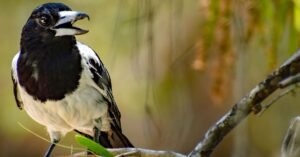
Two species are particularly familiar to Australian birdwatchers: the Grey Butcherbird and the Pied Butcherbird. Both are admired for their vocal abilities, although their appearance, distribution and calls differ.
The Grey Butcherbird is generally smaller and has grey, black and white plumage. The Pied Butcherbird has striking black-and-white markings, including a distinctive dark head and white areas across its body.
Both species are often found in gardens, parks, woodland and open country, where scattered trees provide convenient perches for hunting.
Why Is It Called a Butcher Bird?
The name comes from its unusual feeding behaviour. Butcher birds sometimes impale captured prey on thorns, sharp twigs or barbed wire, creating a food store they can return to later.
This behaviour resembles the work of a butcher hanging meat, which explains the name.
It might sound gruesome, but there’s a practical reason behind it. Securing prey allows the bird to handle food more easily, store it temporarily and return to it when needed.
These birds are skilled predators, yet their hunting techniques are simply part of their natural survival strategy.
What Does a Butcher Bird Look Like?
The two familiar species have some clear differences.
-
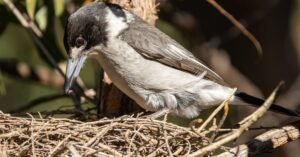
Grey Butcherbird: Has a grey back, white underparts, a black crown and face, and a narrow white collar.
-
Pied Butcherbird: Has a predominantly black-and-white appearance, with a black head and throat, a broad white collar and white underparts.
Young birds often have browner feathers and less distinct markings than adults. This can make them harder to identify at first glance.
Where Do Butcher Birds Live?
They often favour places with a mixture of trees and open ground. Trees provide safe perches and nesting locations, while lawns and clearings give them a good view of insects and other small animals moving below.
Both Grey and Pied Butcherbirds can be encountered around residential areas, although the species you see depends on your location and local habitat. Pied Butcherbirds occur across much of mainland Australia, while Grey Butcherbirds are also widespread.
That’s often the moment when its hunting ability becomes obvious.
What Do Butcher Birds Eat?
Butcher birds are carnivorous hunters. Their diet includes insects, spiders, lizards, frogs, small mammals and, on occasion, smaller birds. They may also eat some fruit and seeds, depending on the species and circumstances.
How They Catch Their Prey
The usual hunting technique is straightforward but effective.
A butcher bird finds a suitable perch, watches the ground and waits for movement. When it spots an opportunity, it swoops down to grab its target, often returning to a branch to eat.
Some prey is caught on the wing, too. This combination of patience, speed and accurate timing makes the butcher bird an impressive hunter.
Its hooked bill helps it secure food, while its unusual habit of wedging or impaling prey allows it to hold food in place as it feeds.
Should You Feed Butcher Birds in Your Garden?
It’s tempting to offer food when a butcher bird visits regularly, particularly if it seems comfortable around people. However, it’s better to encourage natural feeding than to make wild birds dependent on handouts.
You can help by:
-
Planting native vegetation that supports insects and other wildlife.
-
Keeping suitable trees and shrubs in your garden.
-
Avoiding the use of unnecessary pesticides.
-
Providing a clean birdbath with shallow water and a safe place to perch.
-
Keeping pet cats indoors or under effective control.
Avoid offering processed meat, salty leftovers or other unsuitable human foods. A wildlife-friendly garden provides opportunities for natural hunting and helps support a wider range of native species.
The Beautiful Song of the Butcher Bird
The Pied Butcherbird is particularly famous for its clear, flute-like melodies, which can carry through the morning air. Grey Butcherbirds also have rich, musical calls, and pairs may exchange carefully coordinated phrases that sound remarkably like a duet.
Some butcherbirds also imitate other sounds. Their songs can vary between individuals and locations, giving regular listeners another reason to pay attention.
For bird lovers, learning to recognise a call is often easier than spotting the bird itself. Once the sound becomes familiar, you may start hearing butcherbirds on your morning walk long before you see one.
Butcher Bird Breeding and Family Life
Butcherbirds generally build cup-shaped nests from sticks and twigs, adding softer materials to line the inside. Nests are usually placed in trees, where the branches provide some protection from disturbance.
Breeding seasons vary with species and location. The female generally takes the leading role in constructing the nest and incubating the eggs, while the male helps by supplying food. After hatching, the chicks depend on their parents for feeding and protection.
Why Do Butcher Birds Become Aggressive Near Their Nests?
A butcher bird that seems relaxed for most of the year may become defensive during breeding season.
If you walk too close to a nest or recently fledged chicks, an adult may call loudly, swoop towards you or attempt to drive you away. This behaviour is a response to a perceived threat, not an indication that the bird is naturally aggressive towards everyone.
Give nesting birds plenty of space. If you discover a nest while gardening, avoid disturbing the area and choose another route if the adults appear distressed.
Are Butcher Birds Good for the Environment?
Yes. Butcher birds are native predators that form part of Australia’s natural food webs.
By hunting insects and small animals, they contribute to the movement of energy through local ecosystems. They also serve as a reminder that healthy gardens need more than nectar-feeding birds and seed-eating visitors.
A butcher bird catching a lizard or insect might look harsh to human eyes, but predation is a normal part of nature. These birds have evolved to survive by finding and catching suitable prey.
Their presence can also make birdwatching more interesting. Watching a butcher bird hunt, sing or interact with its family offers a glimpse into the complex lives of Australia’s native wildlife.
Frequently Asked Questions About Butcher Birds
1. Are butcher birds aggressive?
They can be territorial, especially when protecting eggs or young birds. Outside these situations, they often keep their distance from people or become accustomed to activity in suburban gardens.
2. Do butcher birds eat other birds?
Yes. Both Grey and Pied Butcherbirds may prey on smaller birds, along with insects, reptiles and other small animals. Their diet depends on the species and the opportunities available.
3. Why does a butcher bird impale its food?
Impaling or wedging prey helps the bird secure food while eating. It can also serve as a temporary food store, allowing the bird to return to uneaten prey later.
4. Can butcher birds be found in suburban gardens?
Yes. They visit many Australian suburbs, particularly where gardens contain trees, open lawns and suitable hunting habitat.
5. How can I attract butcher birds?
Encourage native vegetation, protect trees, reduce pesticide use and provide a clean birdbath. Let the birds hunt naturally rather than relying on regular feeding.
Final Thoughts: A Remarkable Australian Bird
The butcher bird is one of Australia’s most interesting native songbirds. Its striking plumage, confident hunting style and beautiful musical calls make it a rewarding species to watch.
Next time you hear a series of clear whistles from a nearby tree, take a closer look. You may discover a Grey or Pied Butcherbird quietly observing the garden, waiting for its next meal.
For anyone who loves Australian birds, the butcher bird is a reminder that even familiar backyard visitors can have extraordinary habits worth discovering.